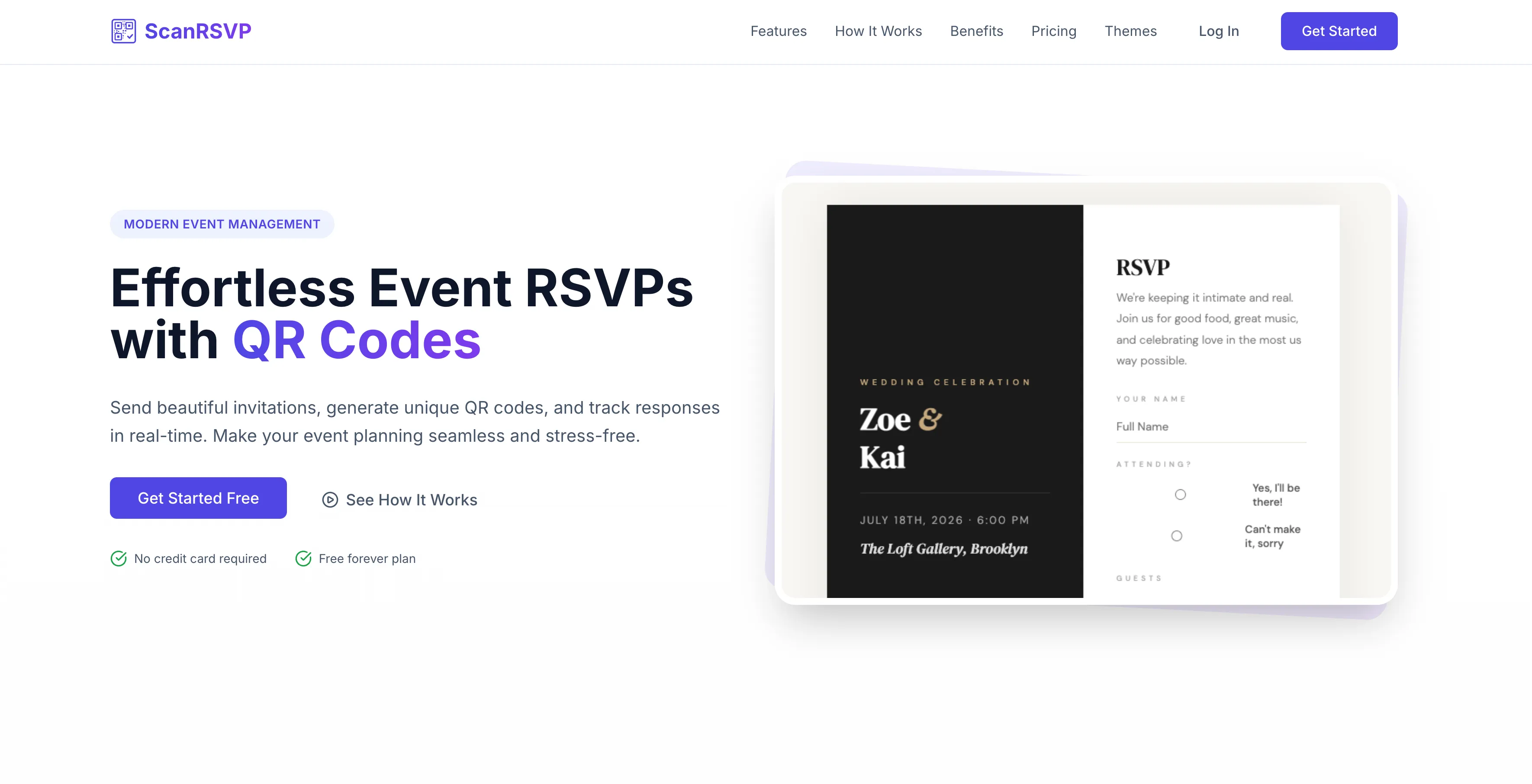
We built ScanRSVP, a QR-code RSVP platform for event hosts, to kill the most tedious part of hosting an event: chasing down a reliable headcount.
ScanRSVP turns any event into a single QR code. A host creates an event, shares the code on an invite, a flyer, or a screen, and guests scan it to RSVP in seconds — no app to install, no account to create. Behind the code, the host gets a live guest list and a real-time headcount that updates as replies arrive.
The problem
Collecting RSVPs is still weirdly painful. Paper lists get lost, group chats scatter the replies, and by the day of the event nobody has a trustworthy count. Hosts end up guessing on catering, seating, and space.
What we built
A passwordless, three-step flow. The host signs up with just an email (OTP auth), sets up the event, picks a theme, and customizes the invite. The system hands back a shareable link and a QR code; guests land on a themed invite, enter their name and party size, and RSVP. Confirmation emails go out automatically, and guests can update or cancel their response from a self-service link — while their email address stays private from the host.
How it works
- Create — the host sets up an event and gets a unique QR code and share link.
- Scan — guests scan and RSVP from their phone in a couple of taps.
- Track — the host watches the headcount and guest list update in real time.
Under the hood
A Flask (Python 3.12) app backed by Supabase for hosted Postgres and passwordless OTP auth, Redis for sessions, and AWS SES for transactional email. QR codes are generated server-side with segno, the front end is Tailwind, and the whole thing ships as a Docker container behind gunicorn. Events auto-expire a few hours after they end via a scheduled Postgres job.
The result
A frictionless RSVP loop that works for everything from a backyard party to a corporate mixer — and gives hosts the one thing they actually need: an accurate count.